Read the sequence
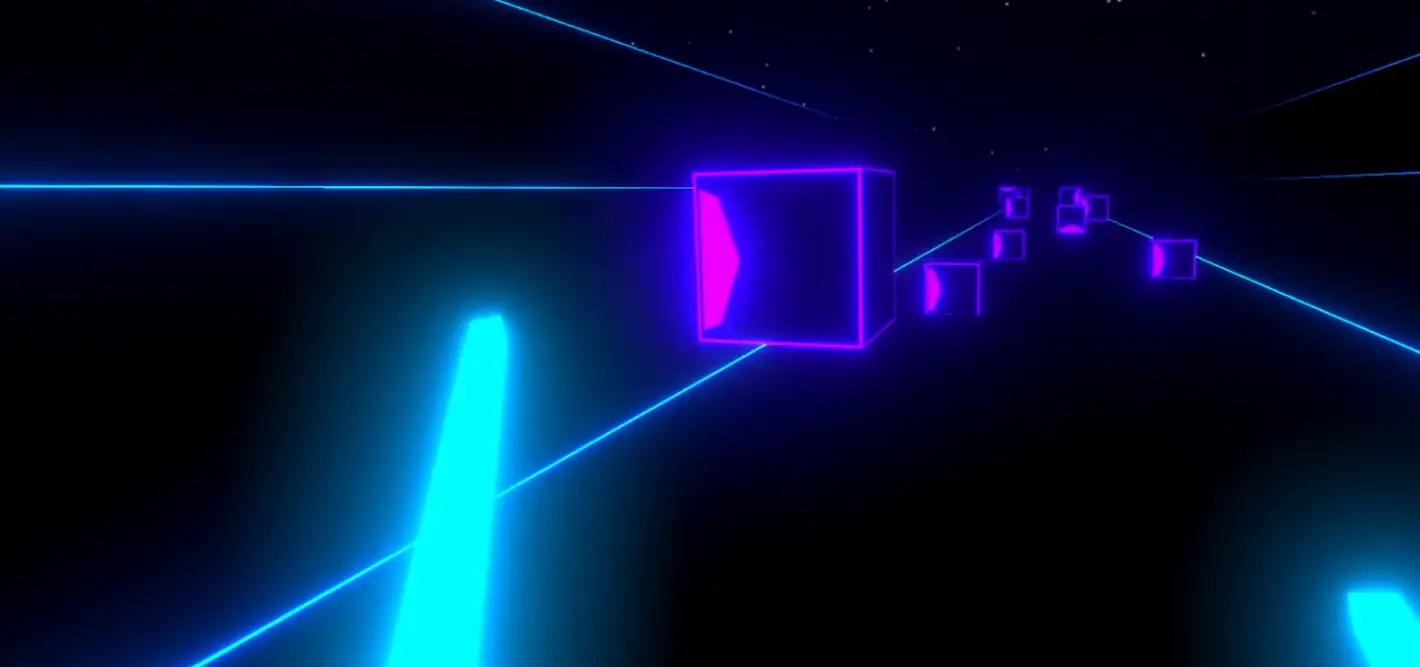
Approaching targets give the player time to recognize the next movement.
Prototype snapshot · VR rhythm study
A motion-controlled rhythm experiment that turns an original song into a sequence of timed, directional targets inside a neon VR environment.
Overview
This prototype began after a close friend created an original song. Because we both enjoyed Beat Saber, I used the track as the foundation for a small VR level inspired by its motion-controlled rhythm gameplay.
The project focused on the connection between audio timing and physical action: targets approach the player in sequence, directional markers communicate the intended strike, and tracked sabers turn listening into movement.
Interaction loop
The prototype uses anticipation, direction, timing, and immediate visual feedback to make each musical cue playable.
Approaching targets give the player time to recognize the next movement.
Markers communicate the intended strike direction before the target reaches the player.
Tracked VR sabers convert controller movement into the central physical action.
The target sequence carries the player through the structure and pacing of the song.
Development focus
The project reduced the genre to a single prototype level so I could concentrate on making musical timing readable inside VR.
I arranged target timing around an existing song, treating the track as both content and the structure of the level.
VR controllers allow the player’s physical swings to become the primary form of interaction.
High-contrast targets, directional markers, and neon sabers help the player read actions quickly while listening to the music.
Takeaway
The prototype showed me that rhythm gameplay depends on more than spawning objects alongside music. Travel time, visual anticipation, directional communication, and controller movement all have to align for a strike to feel connected to the track.
It also expanded my VR experience beyond tabletop object interaction by focusing on faster full-arm motion and audiovisual responsiveness.